SimQ
Quantum computing at Rust speed
SimQ is a high-performance quantum computing SDK written in Rust, cross-validated against Qiskit, qsim, and qulacs, beating Qiskit Aer on 19 of 20 benchmarked workloads and qulacs, the strongest competitor found, on all 12 it covers, with type-safe circuit construction and first-class Python bindings.
use simq::QuantumCircuit;

fn main() {
    // 3-qubit GHZ state
    let mut qc = QuantumCircuit::new(3);
    qc.h(0).cnot(0, 1).cnot(1, 2);

    let result = qc.simulate_with_shots(1024).unwrap();
    println!("{:?}", result.measurements.unwrap().sorted());
    // [("000", 517), ("111", 507)]
}
import simq

builder = simq.CircuitBuilder(2)
builder.h(0)
builder.cx(0, 1)
circuit = builder.build()

simulator = simq.Simulator(simq.SimulatorConfig(shots=1024))
result = simulator.run(circuit)
print(result.state_vector)
Benchmarks
Every number below comes from a cross-validated suite: SimQ’s output is checked
against Qiskit (to 1e-12), qsim (to 5e-6), and qulacs (to 1e-12) on identical
circuits before any timing is trusted. Full methodology, all 20 workloads, and
the one documented loss are in
BENCHMARKS.md;
./benchmarks/run.sh reproduces it.
Scroll to see the full chart →
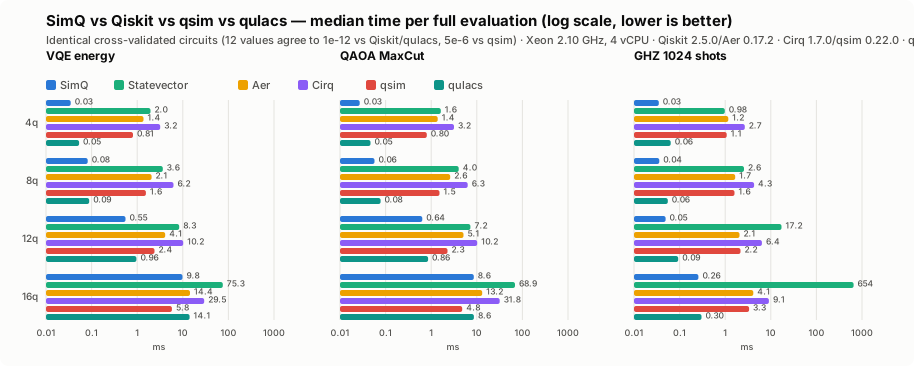
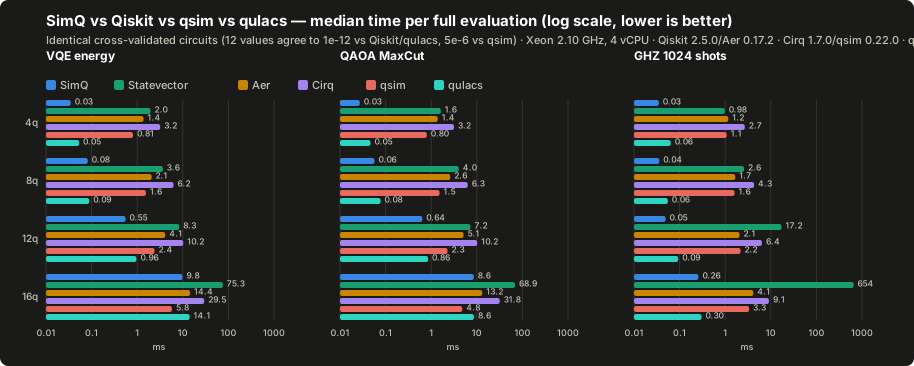
4–16 qubits, VQE / QAOA / GHZ sampling. SimQ beats Qiskit Aer on 19 of 20 workloads in the full suite (1.5–72.6×) and exact Statevector on all 20 (2.7–2534×). The strongest competitor found is qulacs; SimQ still leads it on every covered workload, by 1.0–1.9×.
Scroll to see the full chart →
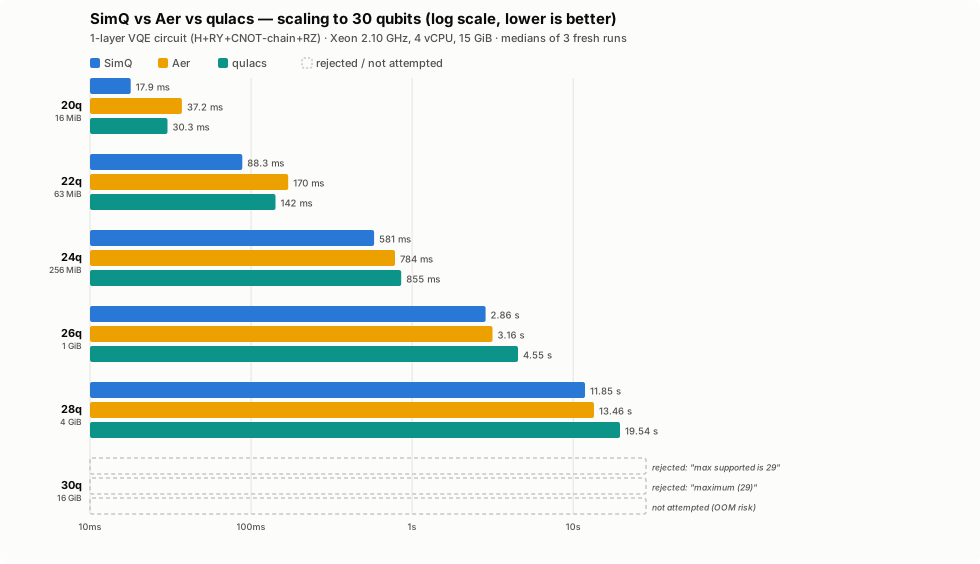
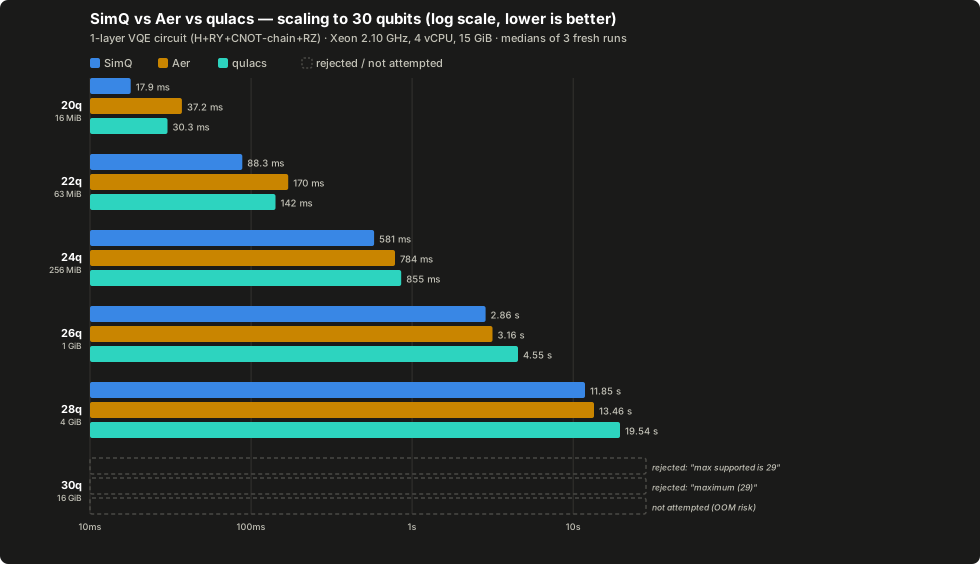
Same machine, pushed to the edge: 20–30 qubits. SimQ still leads at 28 qubits (4 GiB state), and every simulator hits the same wall at 30: a dense statevector needs 16 GiB, more than the 15 GiB reference box has. That’s physics, not a bug: SimQ fails cleanly with a clear error instead of aborting.
This isn’t cherry-picked: the suite also loses one workload (deep QFT at 16 qubits, where the gate structure is long-range and SimQ’s fusion pass is local), and BENCHMARKS.md documents that loss and why it happens, not just the wins.
Why SimQ?
Beats Qiskit Aer on 19 of 20 benchmarked workloads and qulacs (the strongest competitor found) on all 12 it covers. See Benchmarks above.
Compile-time verification of quantum operations. Invalid circuits are caught before they ever run, often before they even compile.
Hybrid sparse/dense state representation; Simulator::run derives its
qubit cap from available memory and refuses an oversized circuit cleanly.
Measured: 29 qubits on 15 GiB of RAM.
Exact expectation values, automatic gradients, and ready-made VQE/QAOA helpers and optimizers.
The same circuit runs on the local simulator or real quantum hardware via the backend abstraction (IBM Quantum and more).
A familiar, Qiskit-like Python API backed by the full-speed Rust core, including noise models and visualization.
Explore the documentation
Install SimQ and run your first circuit in Rust or Python in under five minutes.
Circuits, simulation, observables, VQE/QAOA, the compiler, noise models, and hardware backends.
Runnable, end-to-end examples: Bell states, teleportation, H₂ ground-state VQE, MaxCut QAOA, and more.
How the eight workspace crates fit together, for contributors and the curious.
Development setup, coding standards, testing, and how to send your first pull request.
Rust API docs (rustdoc) and the Python binding reference.